
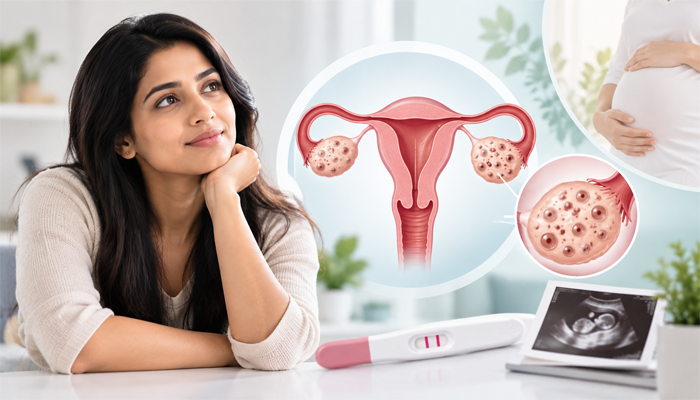
You have PMOS. You want to have a baby. And naturally, one question comes up first:
“Can I get pregnant with PMOS?”
The short answer is yes.
How does PMOS affect fertility?
One of the common ways PMOS and fertility are connected is through irregular or absent ovulation.
If ovulation does not happen regularly, there are fewer opportunities for an egg to meet sperm. This can make getting pregnant take longer. And this is where things can get confusing.
You may have irregular periods, but that does not mean you cannot become pregnant. You may also have PMOS and conceive without fertility treatment. It is different for every woman.
Can I get pregnant with PMOS?
Yes, you can.
If you are wondering can I get pregnant with PMOS, the answer is not a simple yes or no based only on the diagnosis. Your age, how regularly you ovulate, your overall reproductive health, your partner’s fertility and other factors all matter. So, having PMOS is not the end of the road. In fact, many women with PMOS do go on to have successful pregnancies.
The important part is understanding what may be making conception difficult for you.
So, how do you get pregnant with PMOS?
There isn’t one magic solution for how to get pregnant with PMOS. For some women, improving overall health and addressing lifestyle factors may be part of the plan. For others, a doctor may recommend treatment to help with ovulation. If pregnancy does not happen despite trying, your doctor may also look at other possible fertility factors rather than assuming PMOS is the only reason. That is important because fertility involves both partners.
What does PMOS infertility treatment involve?
There is no single PMOS infertility treatment that works for everyone. The treatment depends on what is actually causing difficulty with conception. If irregular ovulation is the main issue, treatment may focus on helping ovulation happen more regularly. In some cases, other fertility treatments may be considered. The first step is usually finding out what is going on rather than jumping straight to advanced treatment.
When should you see a fertility specialist?
If you have PMOS and have been trying to conceive without success, you don’t necessarily have to keep waiting and wondering. It may be worth talking to a fertility specialist, especially if your periods are very irregular or absent, you know that you are not ovulating regularly, or you have been trying for some time without pregnancy.
If you are looking for PMOS treatment for pregnancy, the right approach will depend on your individual situation. And no, having PMOS does not automatically mean you need IVF.
Can PMOS affect pregnancy too?
Getting pregnant is only one part of the journey.
PMOS can also be associated with certain metabolic and pregnancy-related concerns, which is why pre-pregnancy care matters. Current international guidance recommends attention to glucose health when women with PMOS are planning pregnancy or seeking fertility treatment.
So if you are planning a pregnancy, don’t just focus on getting a positive pregnancy test. It is also worth making sure your health is in a good place before and during pregnancy.
Looking for PMOS fertility care in Nagpur?
If you are looking for PMOS fertility treatment in Nagpur, the first step is a proper consultation. Instead of trying to figure things out from symptoms or internet searches, it helps to understand what is actually affecting your fertility.
At Samartha Fertility & Fetal Medicine Centre, you can discuss your fertility concerns, understand the possible reasons for difficulty conceiving and explore treatment options based on your individual situation.
Our best fertility doctor for PMOS in Nagpur can help you understand your fertility health, explain your options clearly and suggest a treatment plan based on your needs.
Because PMOS may make the journey a little different.
It does not mean you cannot reach the destination
FAQs
Yes. PMOS can affect ovulation and make conception more difficult for some women, but it does not mean pregnancy is impossible.
No. Some women with PMOS conceive naturally, while others may need treatment to help with ovulation or other fertility factors.
Treatment depends on the reason for difficulty conceiving. If irregular ovulation is involved, your doctor may recommend treatment to help ovulation or other fertility options based on your situation.
If you are having difficulty conceiving, have very irregular or absent periods, or have other fertility concerns, speaking to a fertility specialist can help you understand your options
No. IVF is not automatically required. Many factors are considered before deciding which fertility treatment, if any, is appropriate.